Dubai Municipality pest control requirements for restaurants are among the most
strictly enforced food safety rules in the UAE. Whether you run a café in JLT,
a hotel kitchen in Downtown, or a cloud kitchen in Al Quoz, your premises must
meet Dubai Food Code standards for pest management at all times. Furthermore, DM
inspectors check pest control compliance as part of every routine food safety
inspection. Gaps in your records, an unlicensed contractor, or a missing treatment
certificate can each result in fines, permit suspension, or temporary closure of
your business.
This guide covers exactly what DM requires, what inspectors look for during a visit,
and how to structure your pest control programme to stay fully compliant year-round.
Additionally, it includes the treatment frequency standards by zone and a complete
compliance checklist you can use before your next DM inspection.
What Dubai Municipality Requires for Restaurant Pest Control
The Legal Basis — Dubai Food Code 2.0 and Public Health Regulations
Dubai Municipality's Food Code 2.0 is the primary regulatory
document governing pest management in all food handling premises. It requires every
food business to implement an Integrated Pest Management (IPM) programme. This must
form a documented, verifiable part of your food safety management system — not simply
an informal arrangement with a local technician.
Additionally, the Public Health Pest Control Section of DM's Public
Health Services Department oversees the licensing of all pest control contractors in
Dubai. Only companies on DM's approved contractor list are permitted to provide pest
control services to food premises. Consequently, using a contractor who is not on
this list — even if they use approved chemical products — constitutes a compliance
violation in its own right.
Which F&B Businesses Must Comply
DM pest control compliance requirements apply to every business that handles, prepares,
stores, or serves food in Dubai. This includes restaurants, cafés, hotel restaurants
and banqueting kitchens, catering companies, food trucks, cloud kitchens, bakeries,
supermarket food preparation areas, and any workplace canteen with a cooking facility.
Moreover, the requirements apply regardless of business size — a ten-seat café carries
the same pest control obligations as a five-star hotel kitchen.
In contrast, food retail units that do not prepare food — such as packaged goods
stores — still require pest control management, but the minimum frequency standards
are applied differently based on risk level. For all full-service food preparation
premises, however, monthly treatment of kitchen areas is the baseline requirement.
The FoodWatch Supplier Management System
A requirement that many restaurant owners overlook is the FoodWatch Supplier
Management System. Dubai Municipality requires all food businesses to register their
pest control contractor digitally via the
FoodWatch portal.
This means the relationship between your restaurant and your pest control company
must be formally recorded in DM's system — not just confirmed by a paper contract.
Therefore, simply having a signed service agreement with a DM-licensed contractor
is not sufficient by itself. Your contractor must also be linked to your premises
within the FoodWatch platform. Ask your current pest control provider whether this
registration is in place. If it is not, request that they complete the FoodWatch
supplier registration before your next scheduled treatment visit.
What DM Inspectors Check During a Food Safety Visit
Understanding what a DM inspection involves helps you maintain ongoing compliance
rather than scrambling before a known visit. DM food safety inspections are not
always announced in advance — routine inspections and complaint-triggered visits
both occur, and your premises must be inspection-ready at all times.
How Inspections Are Triggered
DM food safety inspections fall into two main categories. Routine inspections
are scheduled periodically for all licensed food premises — the frequency depends on
your premises risk classification. Complaint-triggered inspections occur
when DM receives a report of food safety concerns, including pest sightings reported by
customers or neighbouring businesses. Furthermore, inspections can also follow permit
renewals or changes in ownership. In all cases, you should treat your premises as
inspection-ready every day of the year.
What the Inspector Examines On-Site
During a food safety inspection, the DM inspector checks pest control compliance
across three areas. First, they review your documentation — your
treatment certificate file, your FoodWatch contractor registration, and your pest
activity log. Second, they inspect physical conditions — looking for
evidence of live pest activity, droppings, structural entry points, and harborage
zones. Third, they verify contractor details — confirming that
your pest control provider holds a current DM licence.
Similarly, inspectors check that treatment certificate fields are complete and
correctly filled. A certificate that lists only "pest control treatment" without
specifying chemicals, technician ID, or treatment method does not satisfy DM's
documentation requirements — even if the treatment itself was carried out correctly.
Penalties and Consequences for Non-Compliance
DM can issue compliance notices ranging from advisory warnings to formal financial
penalties, depending on the severity and history of the violation. A first documentation
gap typically results in a formal warning and a deadline to produce compliant records.
However, evidence of live pest activity in a food preparation or service area carries
significantly heavier consequences. Inspectors can issue immediate closure notices for
serious active infestations — particularly rodents or cockroaches in a customer-facing
or food contact zone. Repeat violations compound penalties substantially.
For current penalty structures and the official DM food safety compliance framework,
refer to the
DM Public Health Pest Control Section
and the DM Food Safety portal, where guidelines are updated regularly.
⚠️ Critical Compliance Note: FoodWatch Registration Is Mandatory
Many restaurant owners discover only during an inspection that their contractor is
not registered in the FoodWatch Supplier Management system — even though the
contractor holds a valid DM licence. These are two separate requirements. Your
contractor being licensed does not automatically register them against your premises
in FoodWatch. Confirm both before your next scheduled visit.
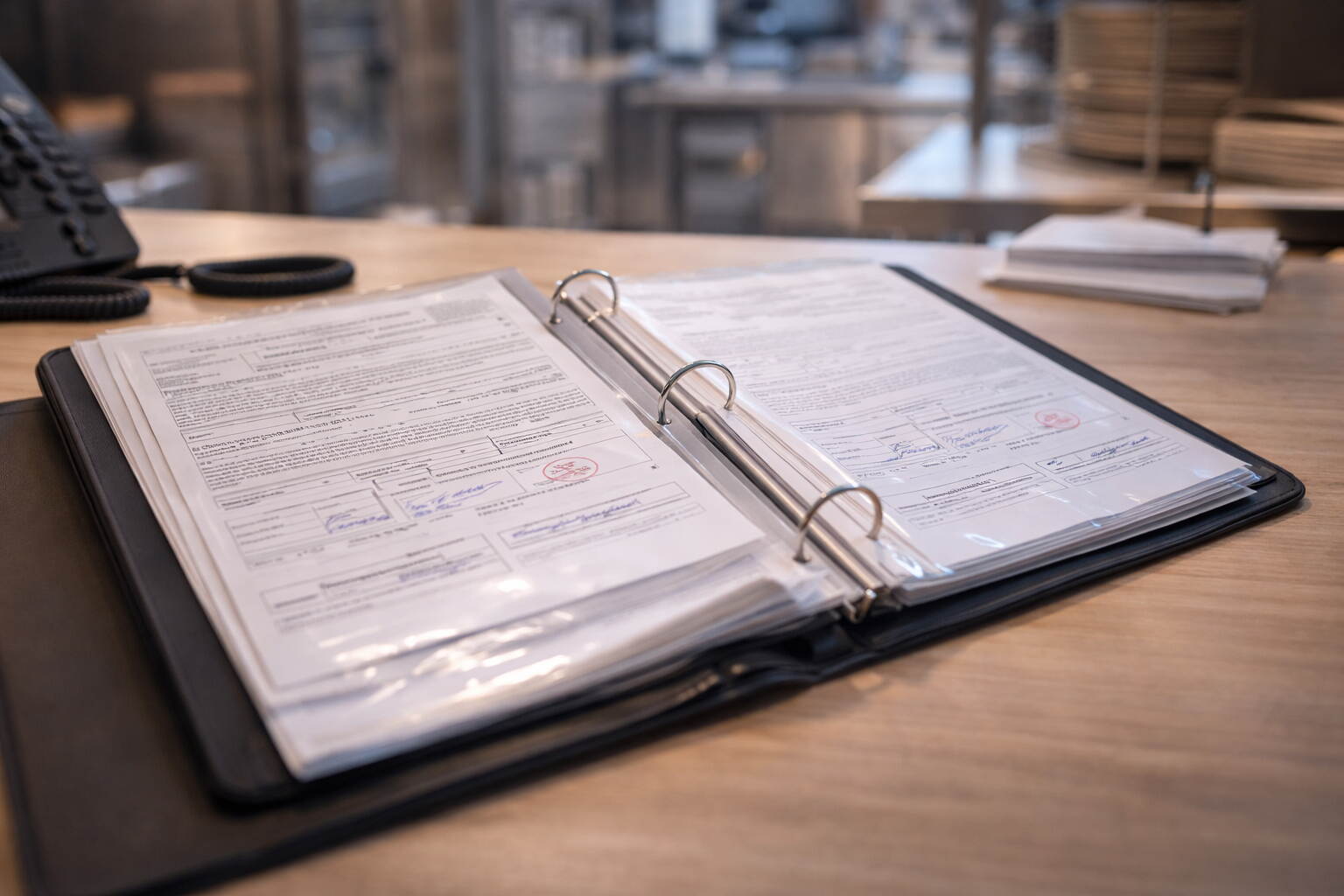
Treatment certificates from every pest control visit must be filed on-site and available for immediate DM inspector review — missing a single certificate constitutes a compliance gap.