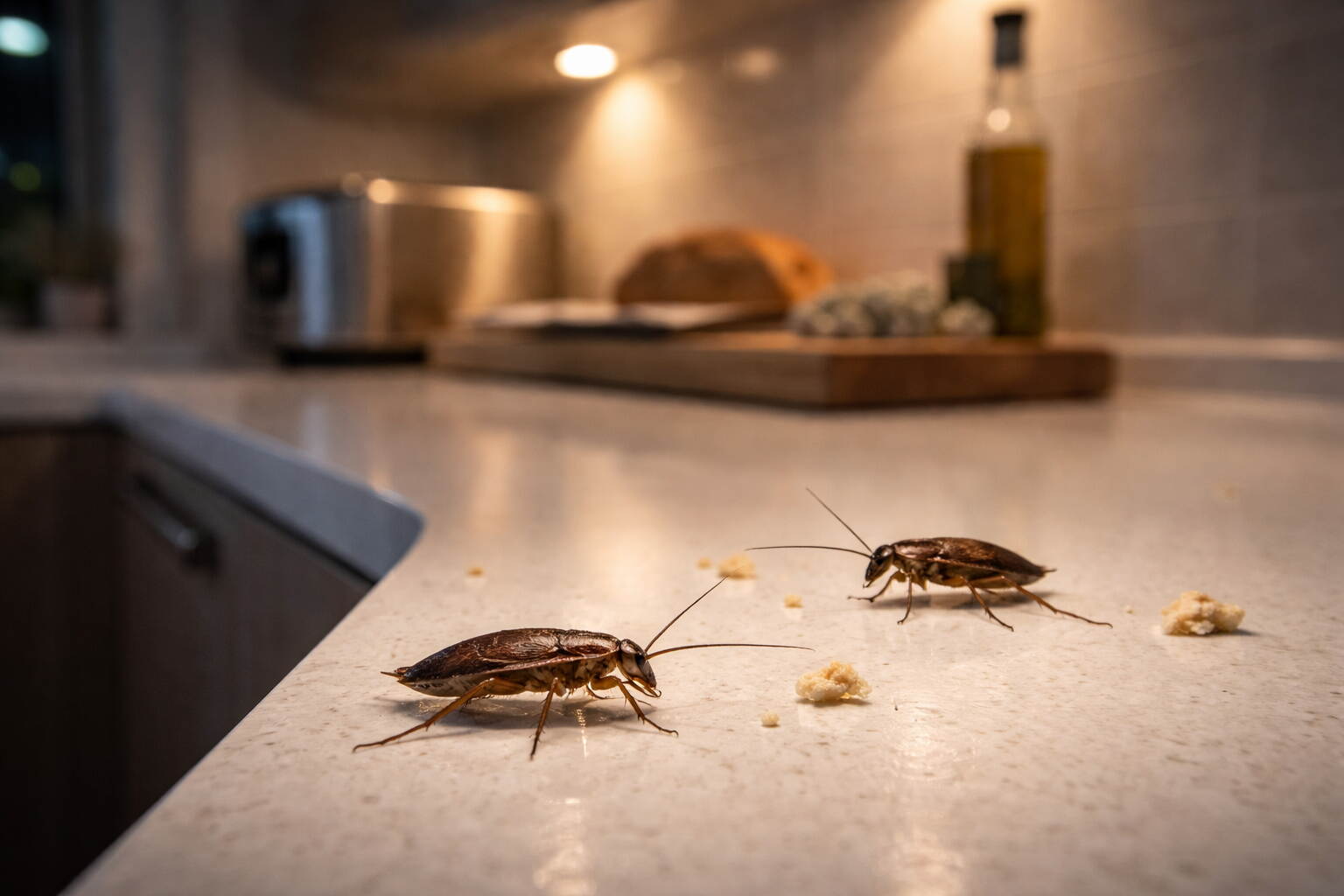
If you want to get rid of cockroaches in your Dubai apartment, you are not alone.
Cockroach infestations affect thousands of Dubai tenants every year — in new builds,
older blocks, and high-rise towers alike. Furthermore, Dubai's climate makes the
problem far more persistent than in most other countries. Unlike cooler regions,
Dubai offers cockroaches warm temperatures and humidity throughout all twelve months.
This means there is no seasonal die-off to slow population growth. As a result, even
a small infestation can escalate into a serious one within just a few weeks if you
do not act quickly.
This guide covers the exact steps to identify, treat, and prevent cockroaches in your
flat. Additionally, it explains why common supermarket treatments often fall short in
Dubai's conditions — and when booking a professional is the smarter and faster solution.
Why Dubai Apartments Are a Hotspot for Cockroaches
Dubai's Climate Creates a Year-Round Breeding Environment
Most pest control guides are written for temperate climates with cold winters.
In those environments, cockroach populations naturally decline during colder months.
However, Dubai's winter temperatures rarely fall below 15°C at night — even in January.
For cockroaches, this means continuous breeding with no die-off period whatsoever.
The German cockroach — the most common apartment pest in Dubai — can produce up to
eight egg cases in its lifetime. Each case contains 30 to 40 eggs.
Consequently, a single pregnant female can become a colony of hundreds within three months.
Additionally, Dubai's high indoor humidity — partly from air conditioning condensation —
provides the moisture cockroaches need to thrive throughout every season.
Building Infrastructure and Shared Spaces
Dubai apartment buildings share drainage systems, utility ducts, and refuse chutes
between units. These connected spaces create direct pathways for cockroaches to move
freely between floors and apartments. Therefore, treating only your own flat may
produce only temporary results.
If a neighbouring unit has an active infestation, cockroaches will return to your flat
within days. Similarly, grocery deliveries, cardboard boxes, and secondhand furniture
regularly introduce cockroaches to otherwise clean apartments. Many tenants find
cockroaches in a freshly cleaned flat for exactly this reason — the entry point is
the building, not their own habits.
The Two Species You Are Most Likely Dealing With
Two cockroach species cause the vast majority of apartment infestations in Dubai.
Identifying which species you have is the first and most important step in any
effective treatment plan — because the correct approach differs significantly
between the two.
The German cockroach (Blattella germanica) is the most
common indoor species in Dubai flats. It measures just 12–15mm and lives almost
entirely within kitchen appliances, cabinet hinges, and the spaces behind white goods.
In contrast, the American cockroach (Periplaneta americana)
is significantly larger — typically 35–40mm. It usually enters through drains, waste
pipes, and AC condensate lines rather than food storage areas.
💡 Identification Tip: Which Species Do You Have?
Look at where and when cockroaches appear. German cockroaches typically emerge
at night in the kitchen — from behind the cooker, under the sink, or out of
appliance vents. American cockroaches often appear in living areas or bathrooms,
moving in from drains and building pipework. Knowing the species determines
whether gel bait, drain sealing, or a combined approach gives you the best result.
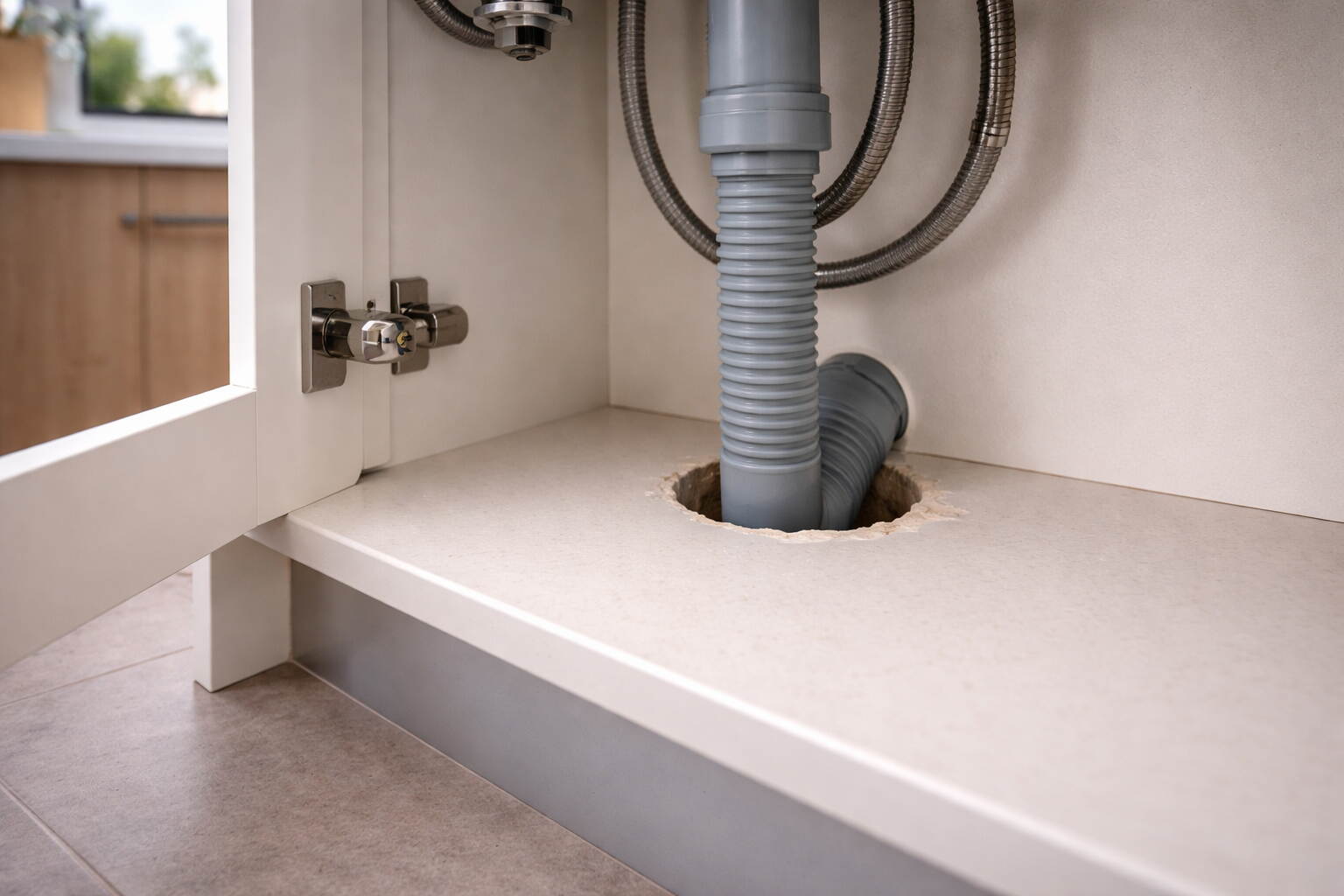
Pipe gaps under the kitchen sink are the primary cockroach entry route in Dubai apartments — and the first area to seal when treating an infestation.
How to Assess the Scale of Your Infestation
Before selecting a treatment approach, assess how serious the infestation is.
The right response depends on whether you are dealing with a minor early-stage problem
or an established colony. Moreover, understanding where cockroaches concentrate in your
flat helps you target treatment effectively rather than treating randomly.
Signs of a Minor or Early-Stage Infestation
Acting early gives you the best chance of eliminating cockroaches before the colony grows.
Signs of a minor infestation include occasional sightings of one or two cockroaches at night.
You may also notice small dark droppings — resembling coffee grounds — around cabinet hinges
or behind the cooker. Additionally, a faint musty or oily odour near the kitchen suggests
a nearby nest. At this stage, targeted DIY treatment is usually effective within one to
two weeks.
Signs You Have a Serious Infestation
A serious infestation is harder to resolve with DIY methods alone.
The clearest warning sign is cockroach sightings during the day — not just at night.
Daytime activity indicates a colony large enough that even hesitant individuals
venture out in search of food. Furthermore, finding cockroach egg cases (oothecae) in
cabinet corners or behind appliances confirms an established breeding population.
Cockroaches in multiple rooms — especially away from food sources — indicate the
infestation has spread well beyond the kitchen. In these situations, professional
treatment delivers significantly better results than any DIY product.
Where Cockroaches Hide in a Dubai Apartment
Knowing where cockroaches shelter helps you target your treatment precisely.
German cockroaches concentrate in warm, dark, humid spaces within the kitchen.
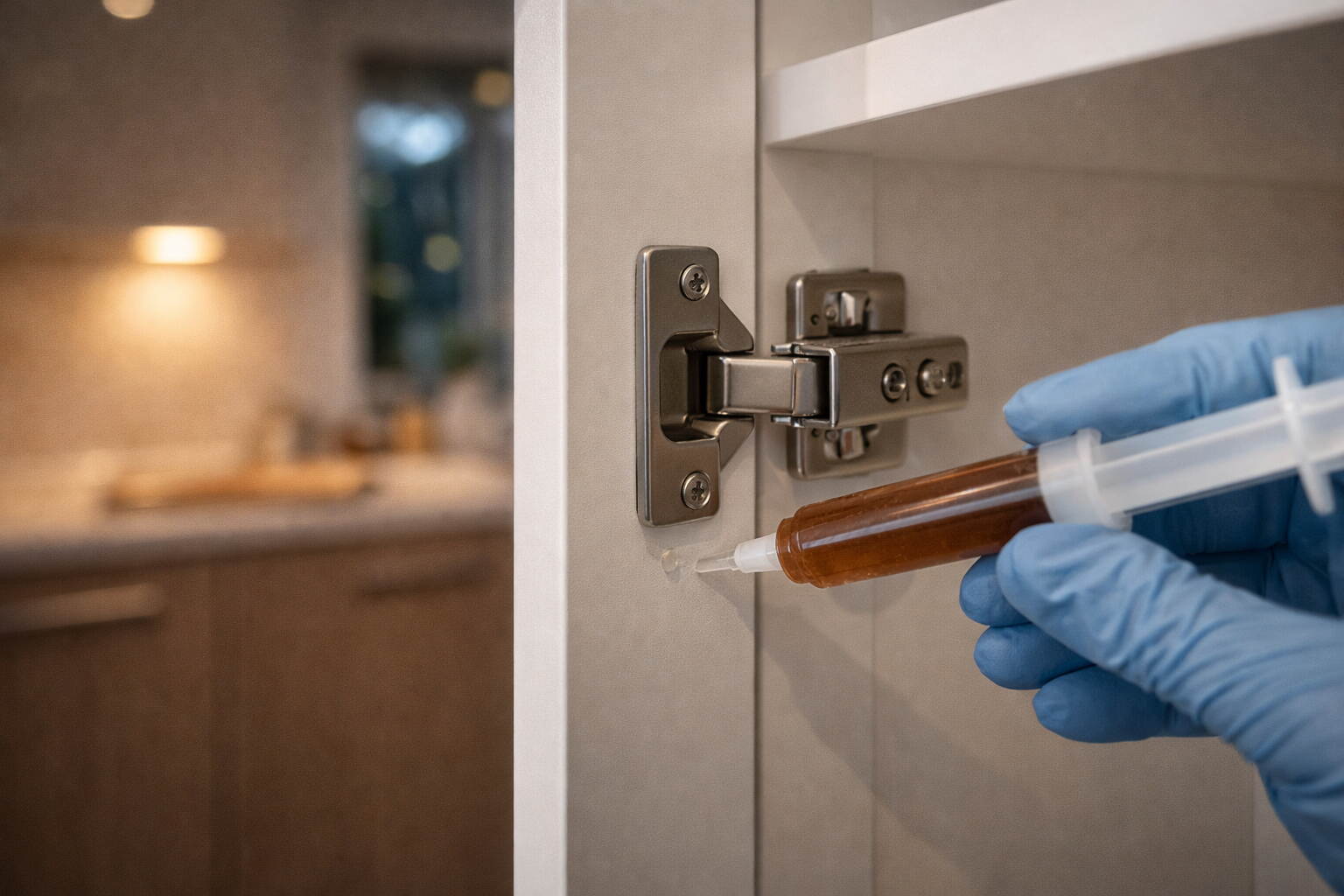
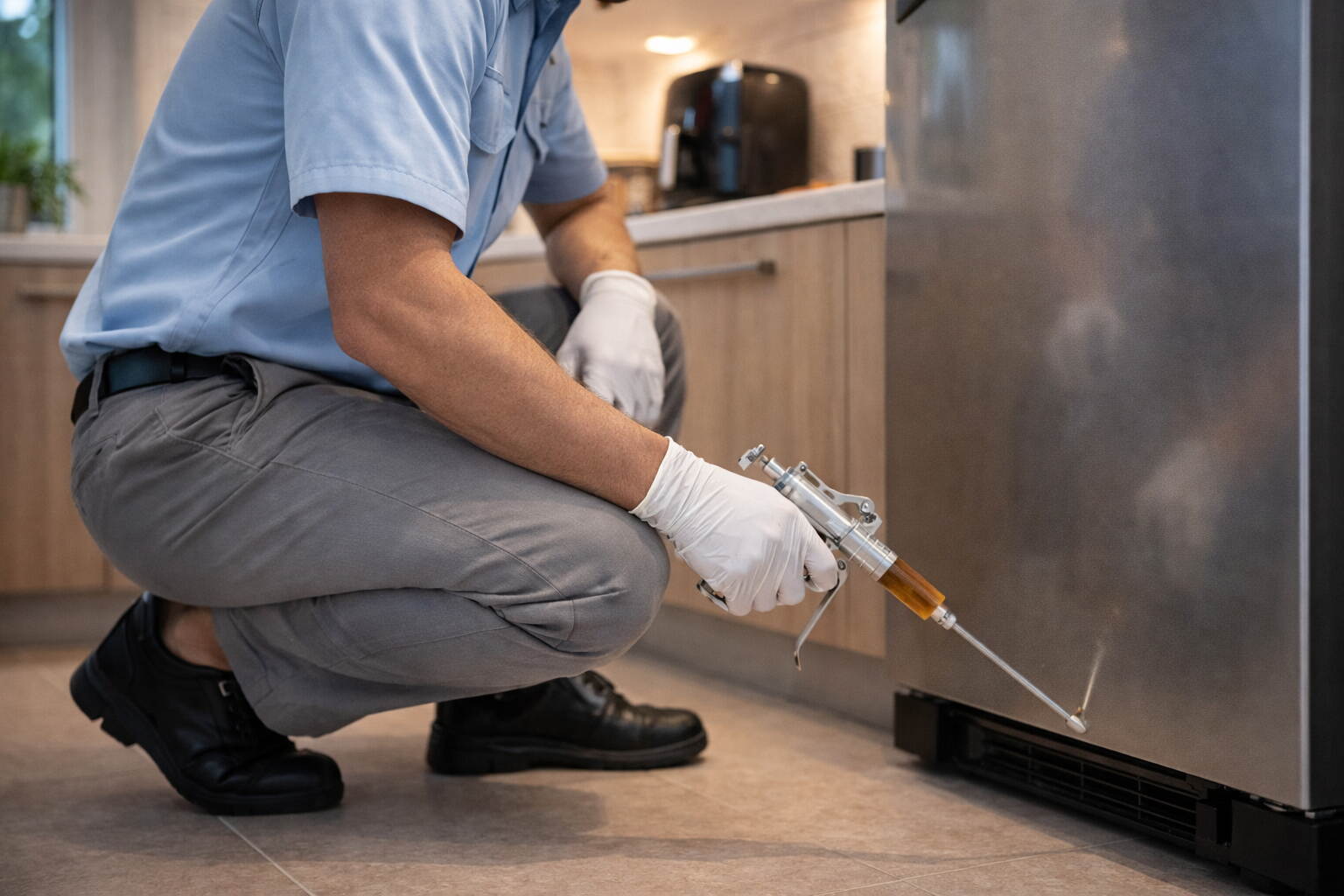
Common hiding spots include the refrigerator motor housing, beneath the cooker base,
and inside dishwasher door seals. Cabinet hinges, built-in appliance gaps, and the
area beneath the kitchen sink are also prime harborage zones.
Furthermore, German cockroaches nest inside electrical outlet boxes and the interiors
of microwaves and clock radios — anywhere warm with minimal disturbance.
American cockroaches, in contrast, concentrate near floor drains, waste pipes, and
utility ducting rather than in food preparation areas. Checking
Dubai Municipality's guidance on approved pest control methods
confirms that targeted treatment of harborage zones is the regulatory best practice
for residential cockroach control in Dubai.