This pre-construction anti-termite guide covers everything Dubai developers and site managers need to protect a new building — starting before the first slab is poured. Subterranean termites cause serious structural damage to UAE buildings every year. Furthermore, Dubai Municipality makes pre-construction soil treatment a mandatory step in the building permit process. Miss the treatment window and you face DM non-compliance, costly remedial work, and delays to your Occupancy Certificate. This guide explains the legal framework, the six treatment stages, the DM-approved chemicals, and how to select the right licensed contractor in Dubai.
Why Termites Are a Construction-Stage Risk in Dubai
The Subterranean Termite Threat in UAE Soil
Dubai and the broader UAE face ongoing pressure from subterranean termites — primarily Coptotermes gestroi and related species. These termites live in underground colonies and forage upward through the soil. Consequently, they enter buildings from below — exploiting expansion joints, service penetrations, and foundation cracks that are invisible from the surface. The UAE's warm sub-surface soil maintains consistent moisture at depth even during dry surface conditions. This creates near-ideal conditions for year-round colony activity directly beneath construction sites.
Sandy soil — which covers most Dubai development zones — presents an additional challenge. Termites travel more easily through loose sand than through dense clay. Moreover, sandy soil drains termiticide applied at standard rates much faster than in other climates. As a result, pre-construction treatment in Dubai requires higher application volumes per square metre than standard international guidelines recommend.
The Critical Treatment Window Before the Slab
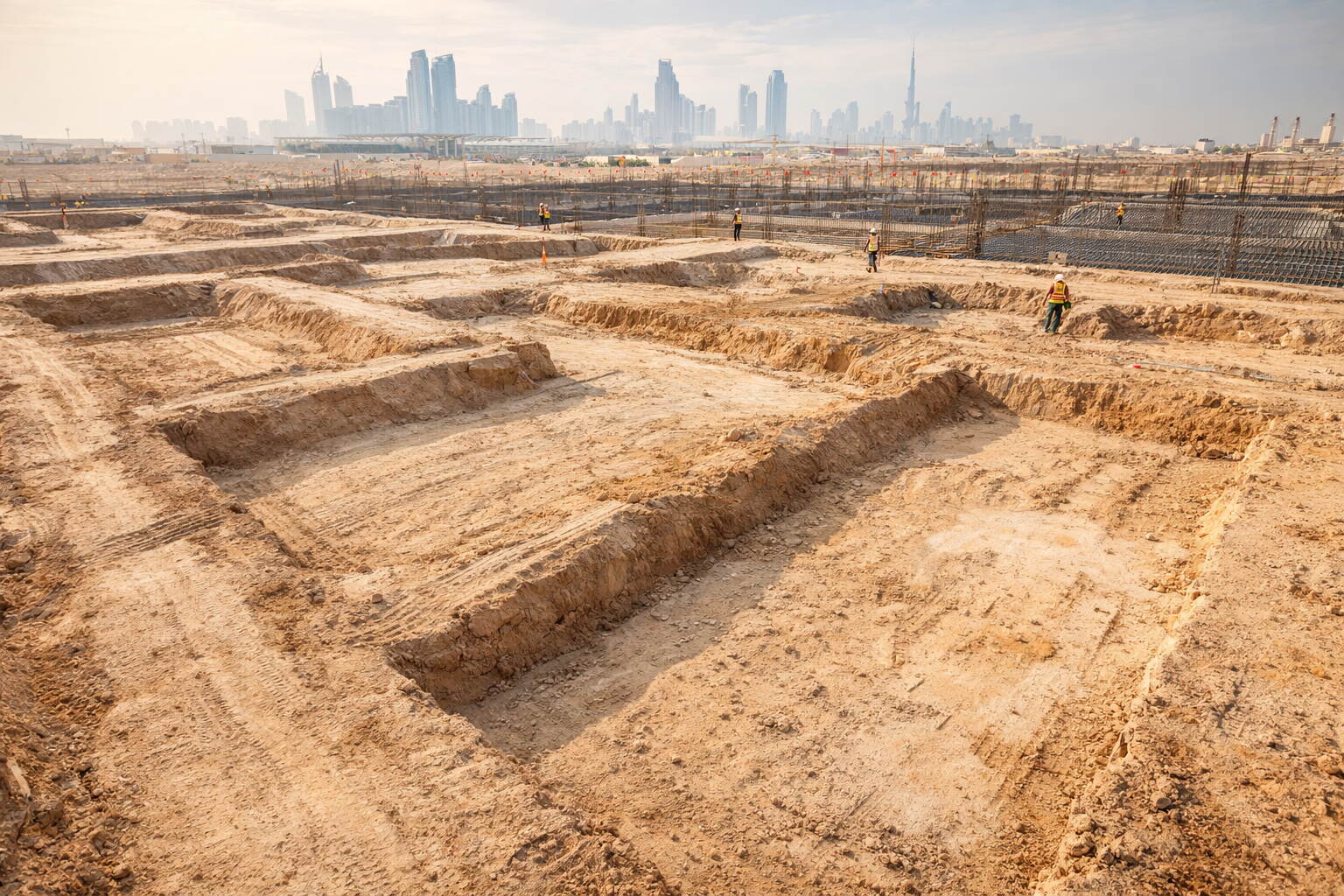
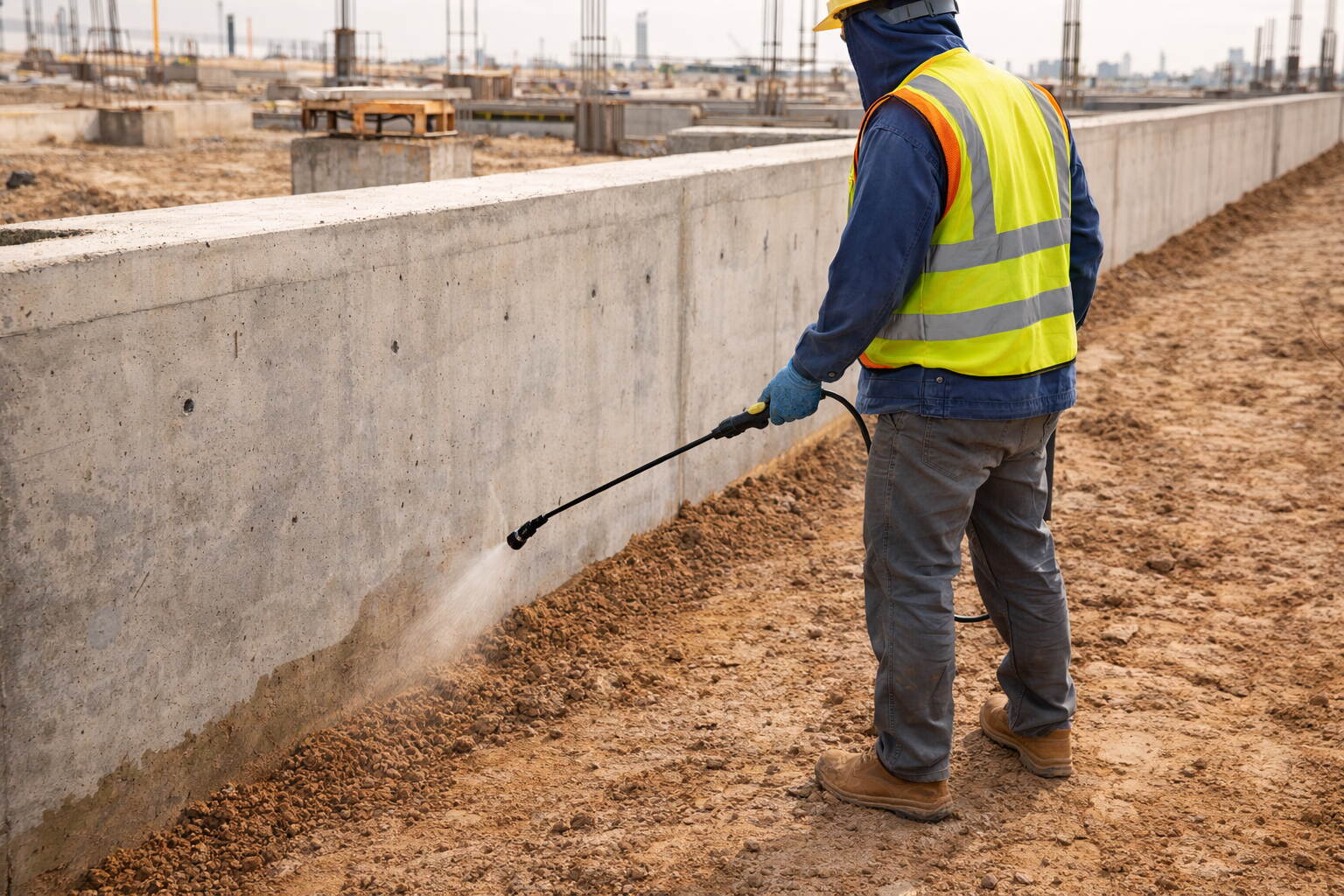
The most important moment in any construction project is the period after excavation reaches final depth and before the concrete slab is poured. This is the only opportunity to apply termiticide directly to the building footprint's base soil. Once the slab is in place, treatment can only reach the perimeter. The sub-slab soil becomes permanently inaccessible. Therefore, the pre-slab treatment window is irreversible: miss it and no remedial measure can replicate it.
Additionally, blinding concrete — the thin layer poured before structural rebar — closes the window permanently. Treatment must be complete and cured before any concrete, even blinding, is placed on the treated area. This means the pest control contractor must be mobilised and ready at the exact moment excavation reaches final depth. Poor site programme coordination is the primary reason this window is missed on Dubai construction projects.
What Happens When Treatment Is Skipped
Buildings constructed without pre-slab anti-termite treatment in Dubai's high-risk soil zones typically show termite ingress within two to five years. Subterranean termites establish foraging channels through sub-slab voids and attack timber flooring, door frames, built-in joinery, and structural timber elements. Furthermore, internal damage often goes undetected until it is extensive — because subterranean termites consume wood from the inside out, leaving surfaces intact.
Beyond structural damage, there is a significant regulatory consequence. Dubai Municipality will not issue a final building completion certificate without a valid anti-termite treatment certificate. Consequently, a developer who skips treatment faces both a structural risk and a building permit closure problem at the same time.
Dubai Municipality Requirements for Anti-Termite Treatment
Dubai Local Order No. 11 of 2003 — Contractor Liability
Under Dubai Local Order No. 11 of 2003, the main contractor on any construction project is legally responsible for pest control throughout the build programme. This responsibility explicitly includes pre-construction anti-termite soil treatment. Moreover, the Order places liability on the main contractor — not the pest control subcontractor — if treatment is inadequate, incorrectly timed, or omitted entirely.
In practice, this means main contractors must ensure their pest control subcontractor is DM-licensed, uses only approved products, treats the full footprint before slab pour, and issues a valid completion certificate. Furthermore, the contractor must retain all treatment records for the full duration of the building's warranty period. These records form part of the handover documentation package.
DM-Approved Chemicals — What You Can and Cannot Use
Dubai Municipality maintains an approved list of pesticides for anti-termite soil treatment. Only products on this list are valid for pre-construction applications in Dubai. Products removed from the approved list in previous review cycles — regardless of their historical effectiveness — are no longer acceptable under any circumstances.
Currently approved formulations for soil termite treatment include synthetic pyrethroid-based products and phenylpyrazole-based products, applied at DM-prescribed rates per square metre. However, the approved list is reviewed and updated periodically. Therefore, always verify the specific product's approval status directly with Dubai Municipality's Public Health department before treatment commences. A contractor who cannot provide the product's DM approval certificate number should not be appointed.
⚠️ DM Compliance Tip
Before treatment begins, request the product data sheet and the DM approval certificate number for the termiticide your contractor intends to use. If the product is not current on Dubai Municipality's approved pesticides list, the treatment is invalid — regardless of how well it was applied. An invalid product means a failed DM inspection, no completion certificate, and a blocked building permit closure.
The Completion Certificate and Building Permit Sign-Off
The anti-termite completion certificate is issued by the DM-licensed pest control contractor after a successful treatment and inspection. This certificate is one of several NOCs required to close the building permit and progress to the Occupancy Certificate stage. Without it, Dubai Municipality, Trakhees, and DDA building departments will not issue final building approvals.
The certificate must identify the product used, the application rate, the treatment date, the area treated in square metres, and the contractor's current DM licence number. Developers should retain this certificate permanently — it forms part of the building's maintenance record and is required when setting up an annual anti-termite maintenance contract throughout the building's operational life.
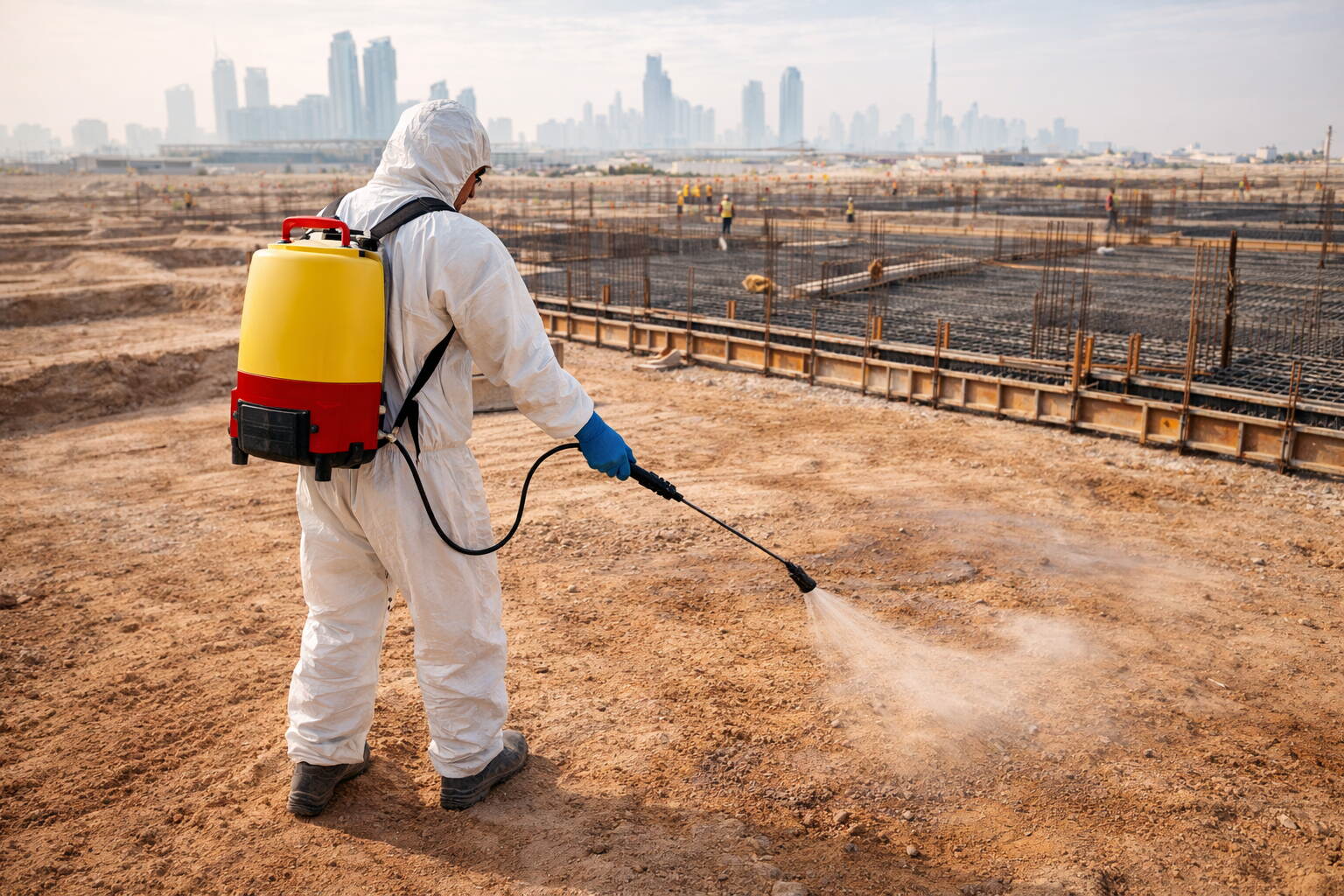
A DM-licensed technician applying termiticide to bare soil after excavation reaches final depth. This application must be complete and cured before any blinding concrete or formwork is placed on the treated surface.