Supernova

Pest Control, Cleaning & Water Tank Services in Dubai

Supernova

Pest Control, Cleaning & Water Tank Services in Dubai

Supernova

Pest Control, Cleaning & Water Tank Services in Dubai

F&B Compliance · Termite Control

Do Restaurants in Dubai Need Anti-Termite Treatment? (DM Rules Explained)

✍️ Supernova Technical Team | 🗓️ | ⏱️ 9 min read | 🏷️ Anti-Termite · Restaurant Dubai · DM Compliance
Anti-termite requirements for a restaurant in Dubai — compliance inspector reviewing pest control documentation at a commercial kitchen counter

⚡ Key Takeaways for F&B Operators

  • Anti-termite requirements for restaurants in Dubai operate under two separate DM frameworks — building regulations and the Dubai Food Code.
  • Pre-slab anti-termite treatment is compulsory for all new commercial builds and fit-outs involving structural work.
  • The Dubai Food Code requires all food premises to hold a signed pest control contract with a DM-licensed company — termite treatment is part of this obligation.
  • The FoodWatch Supplier Management System requires your pest control contractor to be digitally registered — missing this fails your DM food safety inspection.
  • Six specific situations make anti-termite treatment compulsory for operating restaurants, even in existing buildings.

The anti-termite requirements for restaurants in Dubai are not covered by a single regulation — they sit across two separate Dubai Municipality frameworks that apply at different stages of a food business's life. Consequently, many F&B operators either over-comply (paying for treatments they don't need) or under-comply (missing a requirement they didn't know existed). This guide explains exactly when anti-termite treatment is compulsory, what the Dubai Food Code requires, and what your pest control documentation must contain to pass a DM food safety inspection.

The Short Answer — Yes, Under Two Separate DM Frameworks

Dubai restaurant operators face anti-termite obligations under two distinct regulatory tracks. Furthermore, both can apply simultaneously depending on when and how the restaurant premises were built or fitted out. Understanding which framework applies to your situation prevents both compliance gaps and unnecessary expenditure.

Framework 1 — Building Regulations for New Builds and Fit-Outs

Dubai Municipality's building regulations require pre-construction anti-termite soil treatment for all new commercial buildings. This obligation applies at the construction stage — specifically, before the concrete sub-floor slab is poured. A licensed DM pest control company applies an approved termiticide to the compacted sub-base, creating a chemical barrier in the soil that prevents subterranean termites from entering the structure.

Moreover, this requirement extends to restaurant fit-outs that involve structural modifications. If your fit-out includes raising or replacing the floor screed, creating new floor penetrations for drainage or services, or building new internal structural elements from the ground up, the anti-termite treatment window may be triggered. Additionally, Dubai Municipality issues a compliance certificate after treatment — this certificate is required as part of the building approval documentation before a fit-out completion sign-off is granted.

Therefore, any restaurant operator opening a new premises or undertaking a significant structural fit-out must confirm anti-termite treatment status with their contractor before the floor finish is laid. Once tiles, screeds, or floor systems are installed, this treatment window closes permanently.

Framework 2 — Dubai Food Code and Ongoing Operations

The second framework operates independently of construction. The Dubai Food Code — enforced by Dubai Municipality's Food Safety Department — requires all food premises, including restaurants, cafés, hotels, and catering operations, to maintain a signed pest control contract with a DM-licensed pest control company. This is an ongoing operational requirement, not a one-time construction obligation.

Furthermore, the Food Code's pest control requirement is comprehensive — it covers all pest categories, including termites. As a result, a restaurant's pest control contract must include termite inspection and management as part of its scope. A contract that covers only cockroaches, rodents, and flies but excludes termites does not satisfy the full Food Code pest control obligation, particularly for ground-floor or older-building premises where termite risk is elevated.

How the Two Requirements Overlap for Restaurant Owners

For a restaurant opening in a newly constructed building, both frameworks apply in sequence: the building regulation anti-termite treatment is completed during construction, and the Food Code pest control contract — which includes ongoing termite monitoring — is put in place before the food licence is issued. Consequently, the construction certificate and the operational pest control contract are two separate documents that must both be on file.

For an existing restaurant operating in an older building, the building regulation framework may not create any immediate action — if the building was constructed before DM made pre-slab treatment compulsory, a retrofit obligation does not automatically arise. However, the Food Code obligation to maintain a pest control contract covering termite management applies regardless of building age. Additionally, if signs of termite activity are discovered, a post-infestation treatment and re-certification process involves both frameworks simultaneously.

What the Dubai Food Code Actually Requires

Most restaurant operators know they need a pest control contract. However, the specific requirements within that contract — and the documentation that must accompany it — are less well understood. Three distinct requirements are particularly important for anti-termite compliance in a restaurant setting.

The Signed Pest Control Contract Requirement

The Dubai Food Code requires restaurants to hold a current, signed pest control contract with a DM-licensed pest control company. This contract must be in writing, must specify the premises covered, must list the pest categories included (which should explicitly include termites for ground-floor and older-building premises), and must confirm the treatment frequency and method.

Moreover, the contract must be renewed before it expires. An lapsed contract — even by a few days — constitutes a compliance failure at the point of inspection. Therefore, F&B operators should calendar their pest control contract renewal dates and treat the renewal process as non-negotiable, similar to a trade licence renewal.

FoodWatch Supplier Registration — The Often-Missed Requirement

Dubai Municipality's FoodWatch Supplier Management System is the digital platform through which food businesses manage their supplier relationships with DM. Critically, pest control companies providing services to food premises in Dubai must be registered as suppliers on the FoodWatch platform. A pest control company that holds a DM licence but is not registered on FoodWatch cannot be listed as your contracted supplier within the food safety management system.

Consequently, if your pest control provider is not FoodWatch-registered, your contract is technically non-compliant for food premises purposes — even if the company is DM-licensed and their treatments are of high quality. Furthermore, DM inspectors specifically check FoodWatch supplier registration status during food safety inspections. This is a compliance failure that has no visual indicator — the restaurant can appear perfectly clean and maintained, yet still fail inspection on this documentation point alone.

What DM Inspectors Check During a Food Safety Inspection

During a routine Dubai Municipality food safety inspection, pest control documentation is reviewed as a standard agenda item. Inspectors typically check: the signed pest control contract (current and not expired), treatment logs showing dates, technician names, and products used for each visit, evidence that the contractor is FoodWatch-registered, product safety data sheets for all chemicals applied on the premises, and the anti-termite treatment certificate if the building was newly constructed or recently fitted out.

Additionally, if any evidence of termite activity is observed during the inspection — mud tubes, frass, damaged timber — the inspector may issue an improvement notice requiring treatment and re-inspection within a specified timeframe. Moreover, the presence of an existing, compliant pest control contract and documentation does not automatically protect against an improvement notice if active infestation evidence is found. The contract demonstrates ongoing management intent; the absence of infestation evidence demonstrates operational effectiveness.

📋 Documentation Rule — Available on Request, Immediately

Dubai Municipality food safety inspectors expect pest control documentation to be available immediately on request — not located later in a filing system or emailed from a contractor. Every restaurant must maintain a physical or accessible digital compliance file on site at all times. This file must contain: the signed pest control contract, the most recent 12 months of treatment visit reports, product safety data sheets, and the FoodWatch supplier registration confirmation for your pest control provider. Missing any one of these documents at the time of inspection results in a compliance finding regardless of whether the premises are pest-free.
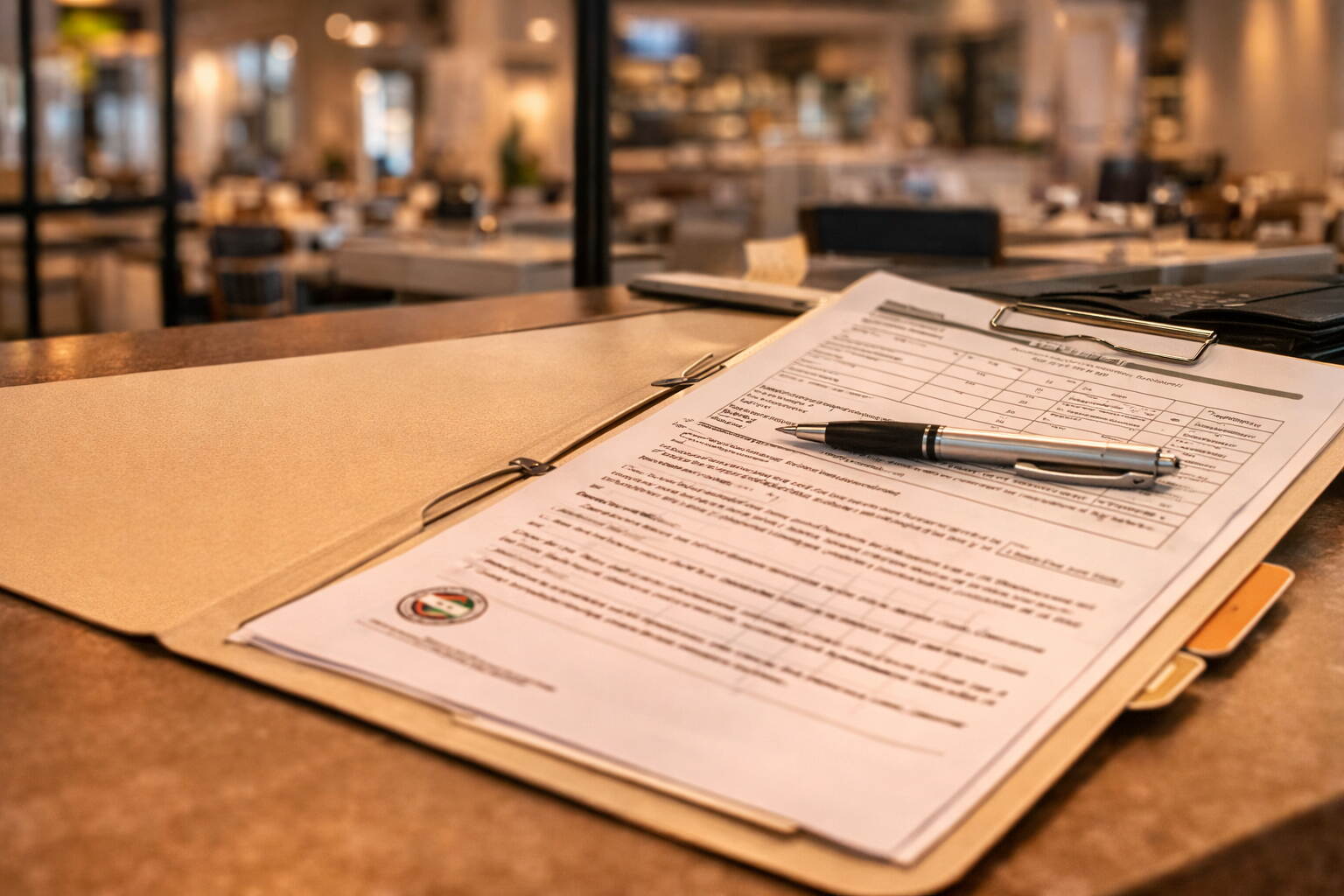
Dubai Food Code pest control compliance documentation folder — signed pest control contract and treatment logs on a desk in a restaurant office

A complete pest control compliance file — contract, treatment logs, product data sheets, and FoodWatch registration confirmation — must be available immediately on request during any DM food safety inspection.

Six Situations Where Anti-Termite Treatment Is Compulsory for a Restaurant

The question "do I need anti-termite treatment?" does not have a single universal answer for Dubai restaurant operators. Instead, the answer depends on six specific situations. If any one of these applies to your premises, anti-termite treatment is either legally required or operationally essential to maintain DM compliance.

1
New Restaurant Construction — Pre-Slab Treatment
If your restaurant is being built from the ground up on a new site, Dubai Municipality building regulations make pre-slab anti-termite soil treatment compulsory before any floor system is installed. A DM-licensed technician applies termiticide to the compacted sub-base before the concrete slab is poured. The treatment creates a chemical soil barrier that prevents subterranean termites from entering the structure through the floor. Moreover, a compliance certificate is issued immediately after treatment and is required as part of the building approval documentation. Without this certificate, the building cannot receive a completion permit.
When to act: Before any floor screed or slab is poured — this window cannot be recovered once the floor is complete.
2
Fit-Out or Major Renovation Involving Structural Floor Work
Restaurant fit-outs that involve breaking up existing floor screeds, creating new drainage penetrations, or building internal structures from slab level may trigger the pre-slab anti-termite requirement at the point of the new structural work. Furthermore, DM fit-out approval submissions for food premises require confirmation that the building's anti-termite treatment status is current. If the original building's treatment certificate is more than 10 years old or was not issued, DM may require updated treatment as a condition of fit-out approval. Consequently, F&B operators should request the building's original anti-termite compliance certificate from the landlord or developer before beginning any structural fit-out.
When to act: During the pre-fit-out due diligence stage — before signing the fit-out contract or submitting DM approval drawings.
3
Ground-Floor Unit in an Older Commercial Building
Restaurants occupying ground-floor units in commercial buildings constructed before pre-slab anti-termite treatment became standard in Dubai face an elevated ongoing termite risk. In these buildings, the sub-floor void may have no chemical barrier, and the proximity of the restaurant kitchen and dining areas to the building perimeter soil creates direct termite access paths. Therefore, for ground-floor restaurants in older buildings, anti-termite treatment must be included explicitly in the pest control contract scope. Additionally, the Food Code pest management obligation requires active monitoring and management of all pest categories — termites included — relevant to the risk profile of the premises.
When to act: At the point of signing the pest control contract — ensure termite inspection is explicitly included in the scope of works.
4
Restaurant Adjacent to Landscaped Areas or Irrigation Systems
Commercial buildings with irrigated landscape beds adjacent to the perimeter — particularly common in mall-based restaurants, hotel F&B outlets, and standalone dining venues with outdoor terraces — face an elevated subterranean termite risk. The constantly moist soil maintained by irrigation systems is a primary driver of subterranean termite colony expansion toward the building. Furthermore, outdoor terrace timber elements — decking, pergola posts, wooden furniture supports — provide food sources close enough to the building structure to support foraging expansion toward the interior. Consequently, any restaurant with irrigated landscaping directly adjacent to the building perimeter should include quarterly anti-termite inspection in its pest control programme regardless of whether the building has a pre-slab treatment certificate.
When to act: Annually at minimum — increase to quarterly inspection if irrigation runs within one metre of the building perimeter wall.
5
Basement or Semi-Basement Restaurant Unit
Restaurants located in basement or semi-basement units face the highest structural termite risk of any food premises type. These units sit at or below ground level, with perimeter walls in direct contact with the surrounding soil. Moreover, the moisture levels in basement environments are typically higher than in above-ground units due to condensation, drainage proximity, and reduced ventilation. Subterranean termites do not need to travel upward to reach a basement restaurant — the structure is at soil level. Therefore, anti-termite soil barrier treatment, injection of perimeter walls, and quarterly inspection are essential components of the pest control programme for any basement F&B outlet.
When to act: Before opening — anti-termite treatment should be part of the fit-out specification for any basement restaurant.
6
Post-Infestation Remediation and DM Re-Certification
If a DM food safety inspection reveals active termite infestation — or if a restaurant operator discovers termite activity through their own inspection — the remediation process involves both treatment and re-certification. The restaurant must appoint a DM-licensed, FoodWatch-registered pest control provider to carry out targeted anti-termite treatment. Additionally, the provider must issue a post-treatment completion report documenting the extent of infestation, treatment method, products used, and a statement of current pest-free status. This report becomes part of the restaurant's compliance file and is presented at the DM re-inspection. Furthermore, the pest control contract scope must be updated to include ongoing termite monitoring post-remediation.
When to act: Immediately upon discovery of any termite warning sign — do not wait for the next scheduled pest control visit. Report to your contractor the same day.
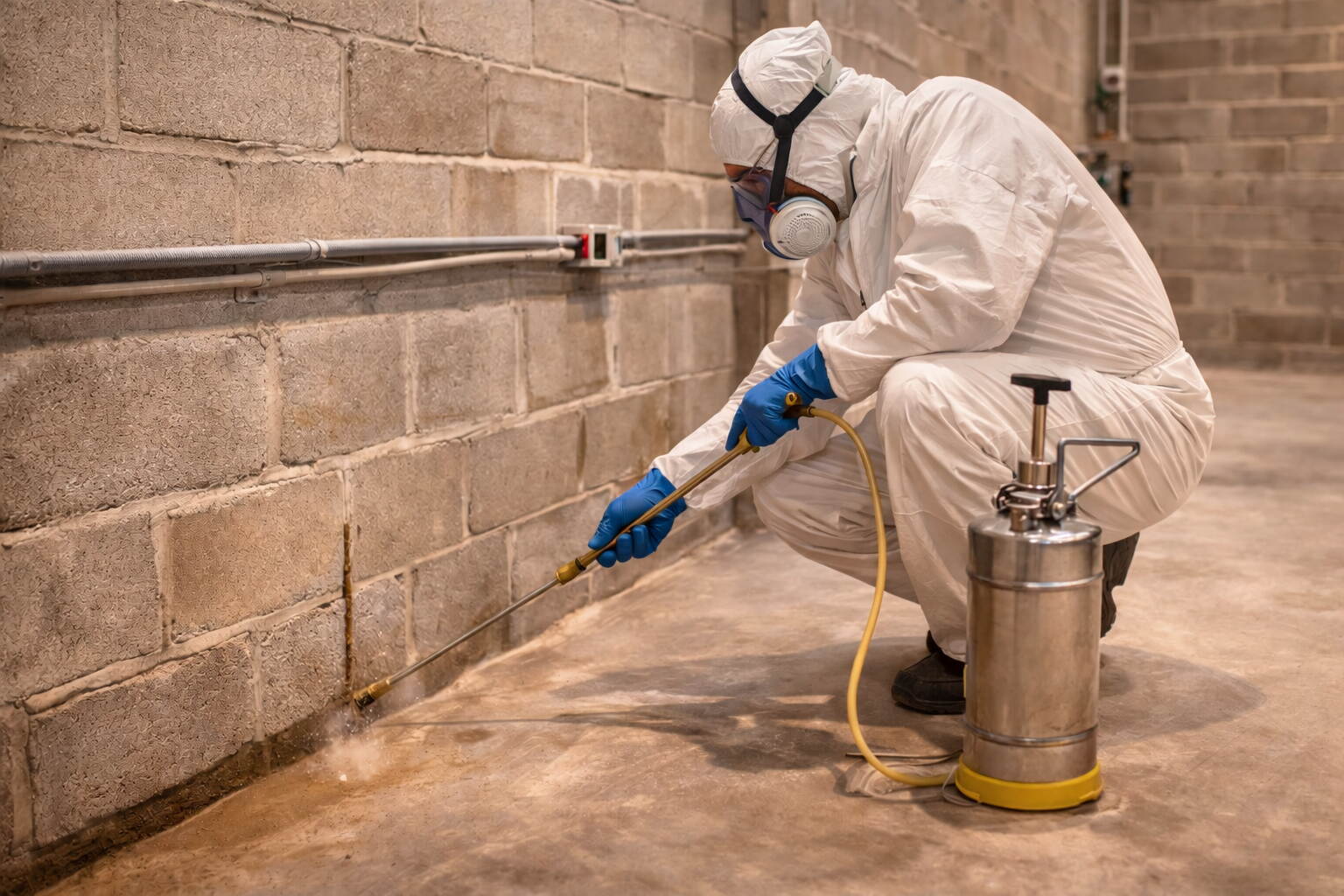
Pest control technician applying anti-termite chemical treatment to the perimeter of a commercial kitchen floor during restaurant fit-out in Dubai

The pre-slab anti-termite treatment window for a new restaurant is limited to the period between structural slab completion and floor finish installation — this window cannot be recovered once tiles or screed are down.

✅ DM Compliance Checklist: 10 Anti-Termite Requirements for Dubai Restaurants

  1. Signed, current pest control contract with a Dubai Municipality licensed company filed on site and available for DM inspection.
  2. Pest control contractor confirmed as registered on the FoodWatch Supplier Management System — verify this in writing before signing the contract.
  3. Pest control contract scope explicitly includes termite inspection and management (not only cockroaches, rodents, and flies).
  4. Pre-construction anti-termite treatment certificate on file if the restaurant is in a newly constructed building (post-2010 construction).
  5. Building anti-termite compliance certificate requested from the landlord or developer before signing the lease for any ground-floor unit.
  6. Written treatment logs maintained for all pest control visits — including date, technician name, DM licence number, products used, and area treated.
  7. Product safety data sheets (MSDS/SDS) for all pest control chemicals used on the premises available in the compliance file.
  8. Annual termite-specific inspection included in the pest control programme — increased to quarterly for ground-floor, basement, and irrigation-adjacent premises.
  9. Post-treatment completion certificate on file if any anti-termite treatment was carried out in the current licence period.
  10. Pest control contract renewal date calendared and renewal confirmed at least two weeks before expiry — a lapsed contract is a compliance failure.

Ready to Bring Your Restaurant's Pest Control into DM Compliance?

Supernova is DM-licensed and FoodWatch-registered — we provide anti-termite treatment, compliant contracts, and full documentation for Dubai F&B premises.

📲 Get DM-Compliant Anti-Termite Service

How to Choose a DM-Compliant Anti-Termite Provider for Your Restaurant

Not every pest control company operating in Dubai is equipped to serve food premises in a fully compliant way. Furthermore, choosing a provider who is DM-licensed but not FoodWatch-registered creates a compliance gap that only becomes visible at the point of inspection — after your contract is already signed. Here are the four criteria that separate a genuinely compliant provider from one that merely claims compliance.

🏛️

DM Pest Control Licence + FoodWatch Registration

Verify both independently before signing any contract. Ask the provider for their DM licence number and cross-check it against the DM Public Health Pest Control register. Additionally, ask for their FoodWatch supplier registration reference number and confirm it is active. A provider who cannot produce both confirmations immediately should not be engaged for food premises work.

🪲

Termite Treatment Specialist — Not Just General Pest Control

Anti-termite treatment for commercial premises requires different methods, equipment, and product knowledge from standard cockroach and rodent control. Confirm the provider has specific experience with commercial anti-termite treatments — pre-slab soil treatment, post-construction barrier injection, and baiting systems. Ask for a case study or reference from a similar food premises project before appointing.

📋

Compliant Documentation Package as Standard

A compliant provider should automatically issue: a signed service contract specifying all pest categories, treatment visit reports after every visit, product safety data sheets for all chemicals used, and an annual or post-treatment completion certificate. Furthermore, they should be able to supply FoodWatch registration evidence in a format accepted by DM inspectors. If a provider does not include these documents as standard, request them explicitly in the contract before signing.

Rapid Response SLA for Active Infestations

If a DM inspector issues an improvement notice due to pest activity, you need a certified response within 24–48 hours — not a scheduled visit next week. Confirm your provider's emergency response SLA in writing in the service contract. Additionally, verify that their rapid response team holds the same DM licensing and FoodWatch registration as the standard service team. Sending an unlicensed technician in an emergency does not satisfy the compliance requirement.

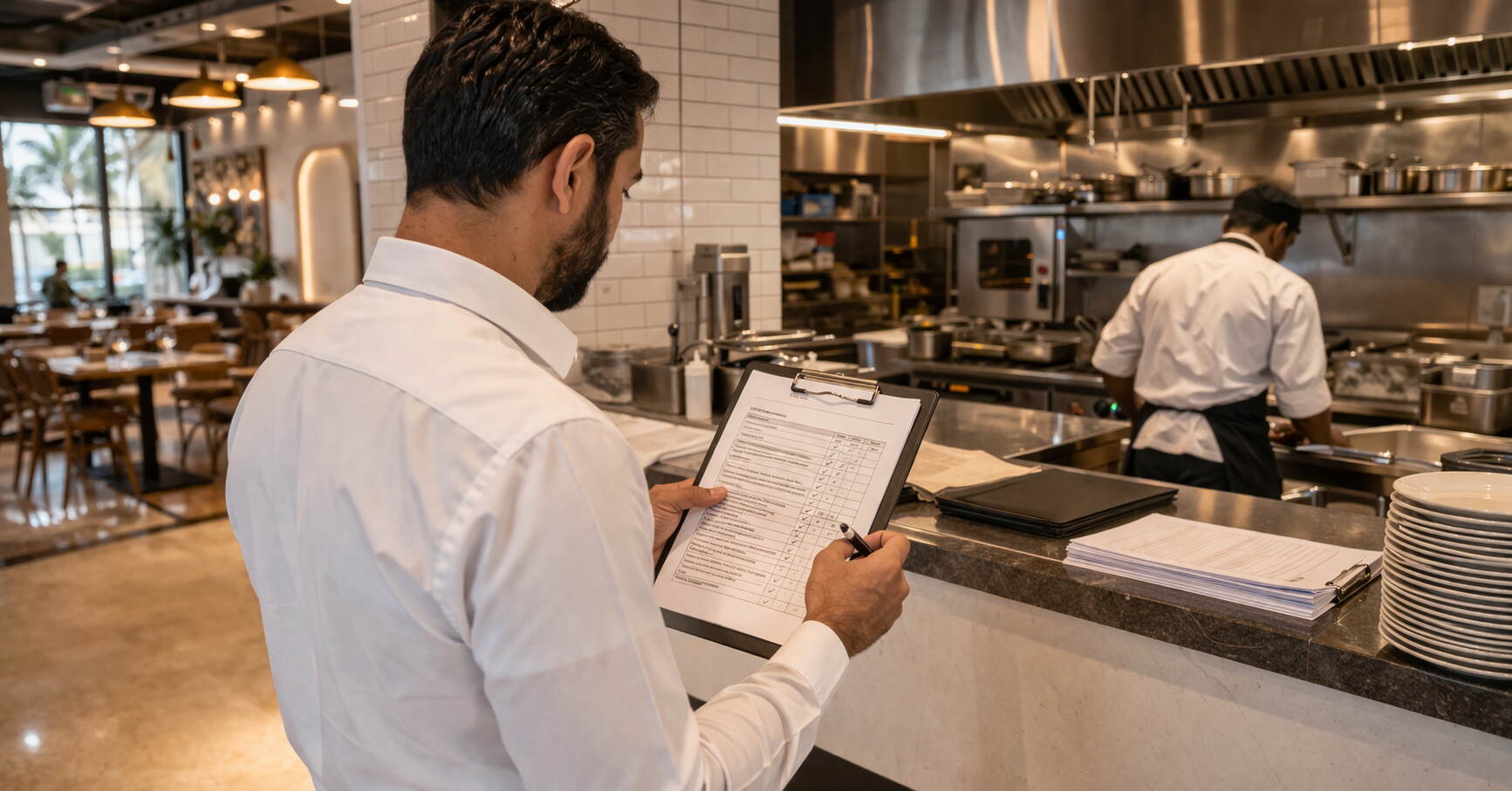
Restaurant owner reviewing pest control compliance documentation folder at a table in a Dubai restaurant

An organised, on-site compliance file — containing the contract, treatment logs, data sheets, and FoodWatch confirmation — is the most effective defence against an unexpected DM food safety inspection finding.

Supernova's anti-termite treatment service is specifically designed for Dubai commercial premises, including restaurants, hotel F&B outlets, and catering facilities. Our team is DM-licensed and FoodWatch-registered, and we provide the complete documentation package — contract, treatment logs, completion certificates, and product data sheets — as standard with every engagement. For full pest control coverage including termites, cockroaches, rodents, and all other DM Food Code categories, our annual pest control contract covers all pest categories in a single compliant agreement. Additionally, for restaurant groups and hotel F&B operations requiring multi-site pest management documentation, our commercial pest control programme provides centralised compliance reporting across all locations. For a broader overview of what Dubai Municipality requires for restaurant pest control beyond anti-termite, see our detailed guide on Dubai Municipality pest control requirements for restaurants.

Frequently Asked Questions — Anti-Termite Requirements for Dubai Restaurants

Is anti-termite treatment legally required for all Dubai restaurants?
Yes — under two separate frameworks. First, Dubai Municipality building regulations require pre-slab anti-termite soil treatment for all new commercial buildings, including new restaurant premises. Second, the Dubai Food Code requires all food establishments to maintain a pest control contract with a DM-licensed company — and that contract must cover termite management for premises where termite risk exists (ground-floor units, older buildings, basement restaurants, and premises adjacent to irrigated landscaping). An operating restaurant in an existing building without active construction is primarily subject to the Food Code operational requirement.
Does my restaurant's pest control contract need to specifically cover termites?
Yes, for most food premises in Dubai. The Dubai Food Code requires comprehensive pest management covering all pest categories relevant to the risk profile of the premises. For ground-floor restaurants, basement units, and premises in older commercial buildings, termite management is a relevant risk category and must be explicitly included in the contract scope. A contract that covers only cockroaches, rodents, and flies without addressing termites is incomplete for these premises types. Ask your provider to confirm termite inspection and management is within the contract scope before signing.
What is the FoodWatch Supplier Management System and why does it matter?
The FoodWatch Supplier Management System is Dubai Municipality's digital platform for managing supplier relationships with food premises. Pest control companies serving food establishments must be registered as suppliers on FoodWatch. DM food safety inspectors check FoodWatch supplier registration during inspections — a pest control company that holds a DM licence but is not FoodWatch-registered does not satisfy the Food Code supplier registration requirement. Before signing any pest control contract for your restaurant, ask the provider for their FoodWatch registration reference and confirm it is current. Supernova is registered on FoodWatch as a certified pest control supplier for food premises.
What documents must I have on site for a DM food safety pest control inspection?
DM food safety inspectors typically check five documents during a pest control compliance review: (1) the signed, current pest control contract; (2) treatment visit logs for the past 12 months showing dates, technicians, and products used; (3) product safety data sheets for all pest control chemicals used on the premises; (4) the pest control provider's FoodWatch supplier registration confirmation; and (5) the anti-termite compliance certificate if applicable. All five documents must be available immediately on request — not located later or emailed from the contractor. Maintain a physical or accessible digital compliance file on site at all times.
My restaurant is in a newly built mall — does the building's anti-termite certificate cover my unit?
Possibly, but you must verify this rather than assume it. Request a copy of the building's anti-termite compliance certificate from the mall developer or building management. Confirm that the certificate covers the sub-slab soil treatment for the entire building footprint, including your unit's floor area. Additionally, confirm the treatment date and the product used — some termiticide barriers have a defined effective lifespan. Furthermore, even with a valid building-level certificate, your Food Code obligation to maintain an operational pest control contract — including termite monitoring — remains a separate, ongoing requirement.
What happens if a DM inspector finds termite activity in my restaurant?
If a DM food safety inspector observes evidence of active termite activity — mud tubes, frass, or damaged timber — they will typically issue an improvement notice requiring treatment and re-inspection within a specified timeframe, usually 7–14 days. The restaurant must appoint a DM-licensed, FoodWatch-registered pest control provider to carry out targeted anti-termite treatment. A post-treatment completion report must be obtained from the provider and filed in the compliance record. Furthermore, DM may visit for a re-inspection to confirm the infestation has been resolved before removing the improvement notice from the establishment's file.
How often does a restaurant in Dubai need anti-termite treatment?
Treatment frequency depends on the premises risk profile. For a new building with a valid pre-slab soil barrier, the structural barrier should provide long-term protection — however, the barrier's effectiveness should be inspected annually as part of the pest control programme. For ground-floor restaurants, basement units, and premises adjacent to irrigated landscaping, quarterly anti-termite inspection visits are recommended. For any premises where a previous infestation was treated, post-treatment inspections at 30 and 90 days are essential to confirm treatment effectiveness, followed by bi-annual inspections for a minimum of two years.
Can I use my building's existing pest control company for anti-termite treatment, or do I need a separate contract?
If the building management's existing pest control company is DM-licensed and FoodWatch-registered, and their contract scope explicitly covers your restaurant unit and includes termite management, a separate contract may not be necessary. However, you must obtain a copy of the contract and confirm it meets all Food Code documentation requirements — including treatment logs specific to your unit, not just building-wide reports. Moreover, the contract must be in the restaurant operator's name (or include the restaurant as a named covered premises) to satisfy DM's documentation requirement during a food safety inspection. Many building-level contracts cover common areas only and do not satisfy individual tenant Food Code obligations.

🍽️

Supernova Technical Team

Supernova Pest Control is a Dubai Municipality licensed and FoodWatch-registered pest control company providing DM-compliant anti-termite treatment and full pest management contracts for restaurants, hotels, and F&B outlets across Dubai. Our documentation package meets all Dubai Food Code requirements for food premises compliance. View our anti-termite service →

Anti-Termite Treatment Locations in Dubai